Peptide Stack Tracker
Running a single compound is manageable without a dedicated tool. Running a stack — BPC-157 twice daily, TB-500 weekly, Ipamorelin nightly — is not. Four schedules, four vials, one morning question: what's due today.
AI-Powered Stack Analysis
Protocol's AI synergy radar scores your active stack across six dimensions: synergy, redundancy, side effect risk, evidence quality, cost, and complexity. The chart updates as you add or remove compounds.
No other peptide tracking app has this. It's built for stack builders who want to know if their compounds are working together — not against each other.

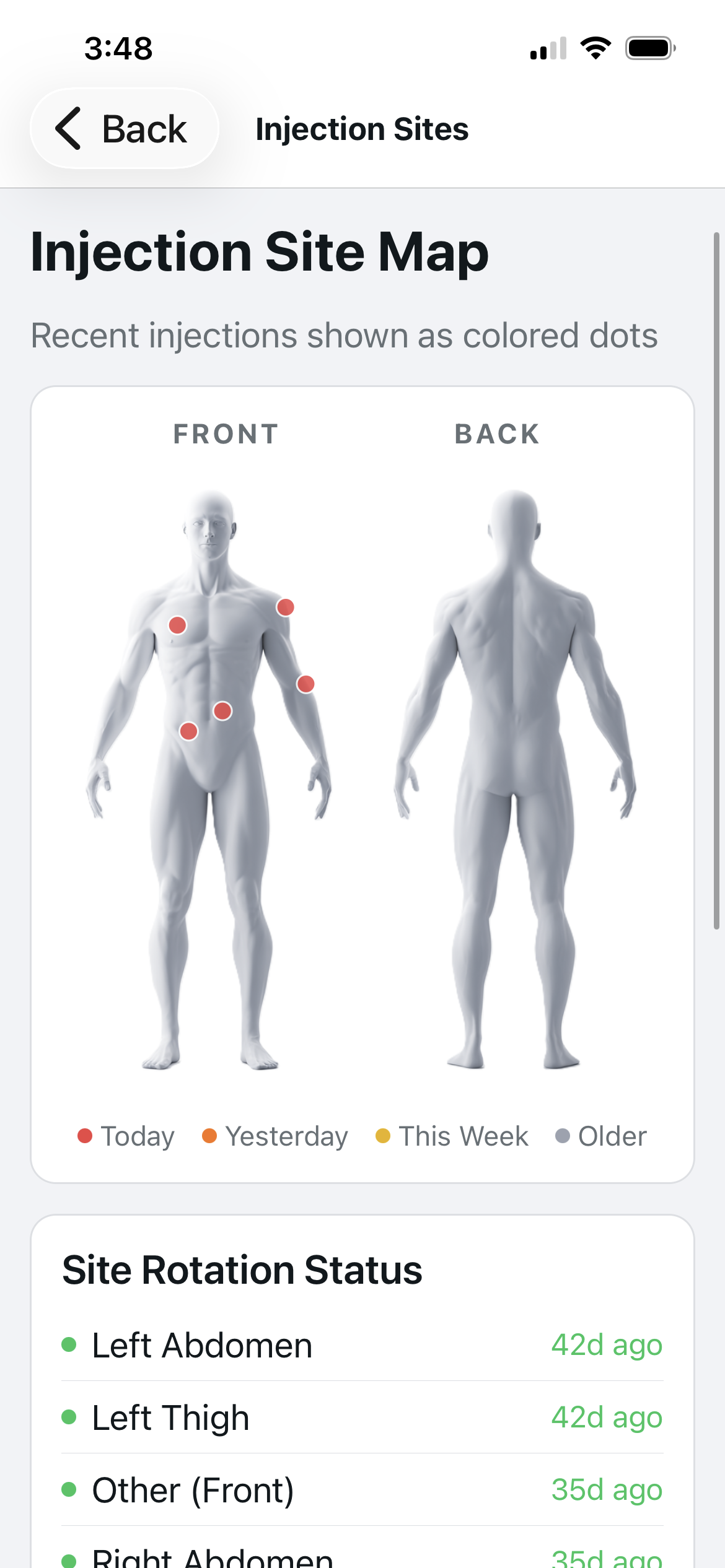
Injection Site Rotation Across the Whole Stack
When running multiple SubQ compounds, all of them compete for the same injection zones. Protocol tracks rotation across your entire stack — not per compound — so no zone gets overused.
How It Works
The consolidated daily checklist problem
Most people who stack compounds end up with separate tracking for each: a note for one compound, a calendar reminder for another, a spreadsheet row for a third. A stack tracker collapses this into one daily checklist — every compound, every schedule, in a single view.
Scheduling across different frequencies
The hardest part of stack tracking isn't the logging — it's the scheduling math. Twice-daily, every-other-day, weekly, and specific day patterns all need to coexist. A stack tracker generates the correct daily checklist for any combination of frequencies automatically.
Synergy and interaction data matters for stacks
Some compounds complement each other mechanistically; others are redundant; some interact in ways worth knowing about before you run them together. An AI synergy score that rates your stack on synergy, redundancy, side effect risk, and evidence quality helps you build stacks intentionally rather than additively.
Injection site rotation across multiple compounds
A stack using SubQ injections across multiple compounds shares the same body zones. Site rotation tracking across the whole stack — not just per-compound — prevents tissue stress that builds when multiple compounds compete for the same zones.
Stack analysis in Protocol
AI Synergy Radar
Six-dimension scoring: synergy, redundancy, side effect risk, evidence quality, cost, and complexity. Know your stack before you run it.
AI Stack Builder
Describe your goal and the AI research assistant recommends compounds, doses, and schedules based on the 81-compound library.

What Protocol Tracks
- ✓Unified daily checklist across all stack compounds
- ✓Per-compound scheduling (daily, 2x daily, every X days, specific days)
- ✓AI synergy radar chart — 6-dimension stack scoring
- ✓Injection site rotation tracking across all compounds
- ✓Stack comparison across cycles — what worked, what to adjust
Frequently Asked Questions
How do I track multiple peptides at once?+
Does Protocol show peptide stack interactions?+
Can I use different injection frequencies in one stack?+
How do I build a peptide stack?+
Related Guides
Start tracking with Protocol.
Free on iOS and Android. No account required. The complete peptide tracking system.